

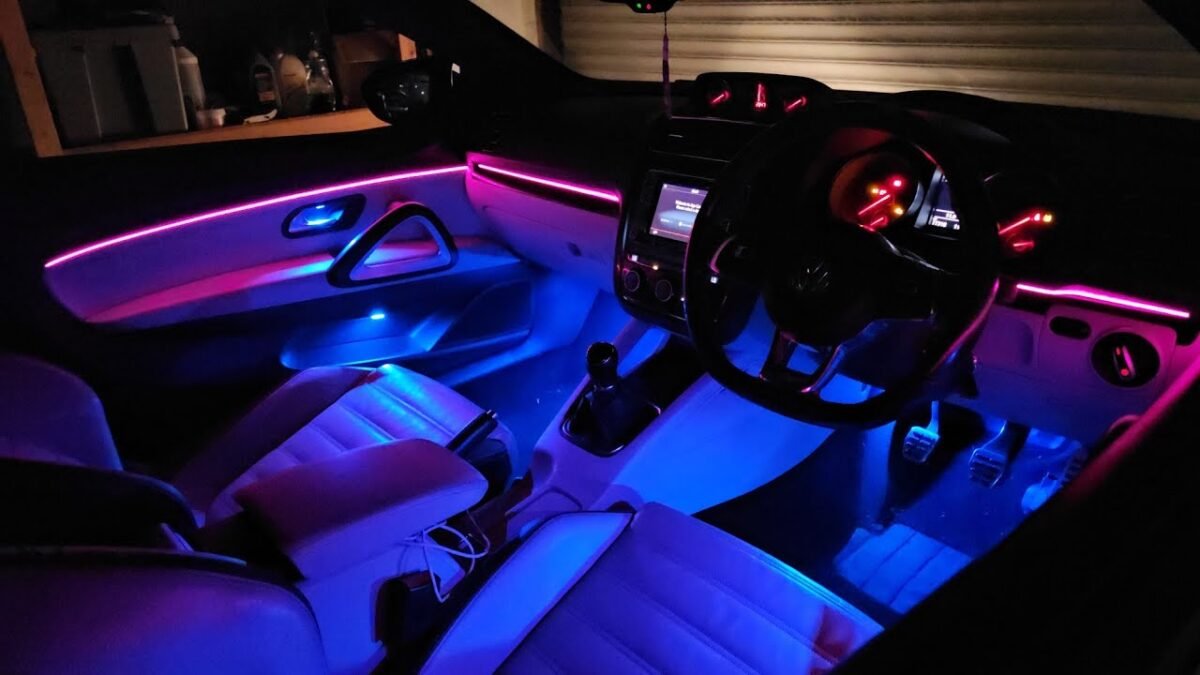
Ambient lighting has shifted from a “luxury extra” to a core part of cabin design. Modern interiors rely on cleaner dashboards, larger screens, and fewer physical buttons, so lighting now does more than look good. It shapes how the cabin feels at night, helps drivers notice key areas without glare, and supports brand identity in a market where many interiors look similar.
You can also see this shift in the market data. Industry reports consistently show steady growth in automotive interior ambient lighting systems through the late 2020s and into the 2030s, driven by wider adoption across more vehicle classes and trims.
Trend 1: Multi-zone RGB lighting becomes the new baseline
The most visible trend is how widely ambient lighting spreads across the cabin. Earlier systems were limited to footwells or door inserts. Modern systems extend into dashboard accents, door ribbons, center console edges, storage compartments, cupholders, and sometimes seat-area trim. What makes this feel “modern” isn’t just more LEDs—it’s the shift to multi-zone control, where the driver side can stay subtle while passenger areas use brighter or different tones.
Automakers market this as personalization. For example, Volkswagen highlights ambient lighting with a broader color range (such as “30 colours” on the ID.7 Tourer feature page), positioning it as standard cabin comfort and character rather than a niche add-on.
Trend 2: Lighting turns into part of the interface (HMI)
A major leap is how ambient lighting blends into the user interface instead of sitting “around” it. Rather than a separate decorative strip, lighting now supports controls and feedback. The concept is that your car can communicate softly through light—without relying only on chimes or popup messages.
BMW’s “Interaction Bar” is a clear example of this direction. BMW describes it as a light-and-control element integrated into the instrument panel area, combining illumination with touch-style controls. Industry coverage also frames it as next-level HMI (human–machine interface), emphasizing how lighting and functionality merge into one continuous cabin element.
Trend 3: Drive-mode linked themes feel more common
Drive modes used to be mostly mechanical and display-based (throttle response, steering weight, and a small icon on the cluster). Now, brands increasingly add cabin cues, and ambient lighting is an easy way to do it. Switching to Sport might trigger a more intense tone, while Eco might use calmer color temperatures and lower brightness.
Hyundai’s owner documentation describes this directly: when “Link to Drive Mode” is enabled, the ambient light color changes according to the selected drive mode. This makes mode changes feel “real” inside the cabin, not just a setting buried in a menu.
Trend 4: Event-based lighting (subtle alerts, not disco mode)
Another trend is event-driven lighting behavior. The system can change or animate based on what’s happening: unlocking the car, opening doors, receiving calls, or certain driver-assistance prompts. When done right, it stays in your peripheral vision and avoids the harshness of sudden screen alerts.
BMW’s Interaction Bar concept supports this broader idea of dynamic light feedback for events and controls, reinforcing how lighting increasingly doubles as a communication layer.
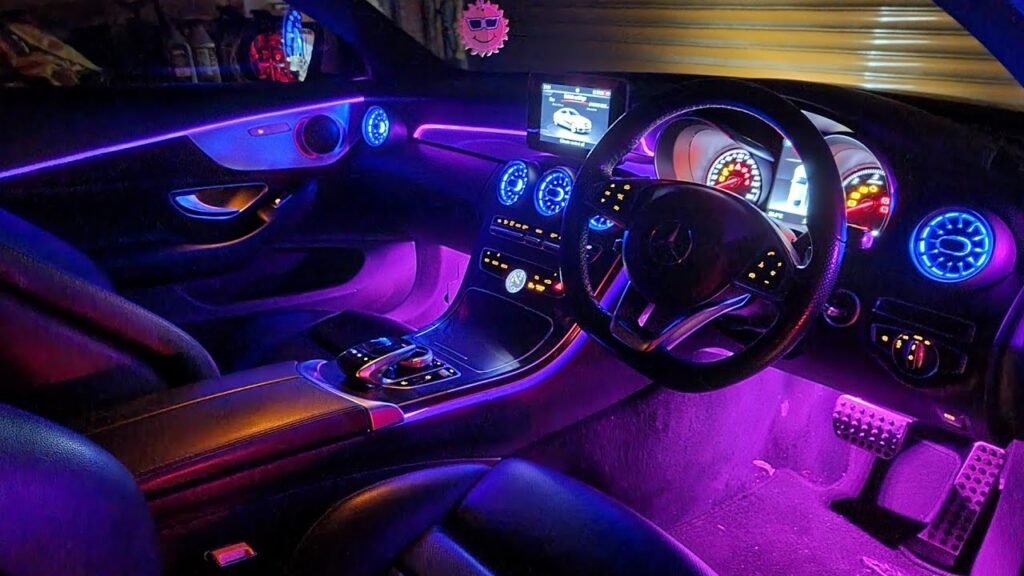
Trend 5: “Hidden-until-lit” design and better diffusion
Premium-looking ambient lighting isn’t about brightness. It’s about diffusion and integration. Manufacturers now hide LED sources behind trim materials so the lighting looks like a smooth glow rather than a row of dots. This “hidden-until-lit” approach also keeps the cabin looking clean during the day, then adds depth at night.
This matters because glare and hot spots can feel cheap and distracting. The newest interiors aim for a consistent light line with soft edges, especially across the dashboard where your eyes spend the most time.
Trend 6: Comfort-focused lighting choices (warmer, calmer, less tiring)
As cabins become more screen-heavy, brands are paying more attention to eye comfort at night. That means offering warmer tones, softer brightness curves, and easier adjustment. A modern lighting system should let you reduce brightness enough that the interior feels calm while still giving visibility in key spots like door handles, storage, and the center console.
The practical angle is simple: better ambient lighting reduces “search time” in the cabin at night (finding a bottle, locating a port, spotting door controls) without forcing the dome light on.
Trend 7: More OEM-like aftermarket upgrades (but quality varies)
The aftermarket scene is growing too, and it’s getting closer to factory style with kits that add multi-zone strips, app control, and synchronized effects. The catch is consistency: poor-quality installs can create glare, rattles, uneven lighting, or electrical issues. OEM systems integrate through the vehicle network and are designed around safety and durability standards. Aftermarket solutions vary widely in wiring quality, heat management, and long-term reliability.
If you’re upgrading, prioritize clean routing, proper fusing, and professional installation if the kit ties into doors or dashboard panels.
What to look for in a “good” ambient lighting system (quick checklist)
Here’s one section in bullets, as requested:
- True multi-zone control (not just one color everywhere)
- Wide dimming range so it stays subtle at night
- Even diffusion with no visible LED dots
- Easy access controls in the infotainment (not buried menus)
- Drive-mode linking if you care about a themed cabin feel
- Thoughtful placement (door handles, console, footwells) instead of random strips
- No glare on glass or mirrors when viewed from normal seating position
FAQs
Are ambient lights only for style, or do they help in real driving?
They help more than people think. Well-designed ambient lighting improves nighttime usability by guiding your eyes to key controls and storage areas without harsh dome lighting. It also supports calmer visibility in cabins that already have bright screens.
Do all “RGB ambient lighting” systems offer multi-zone control?
No. Many systems offer multiple colors but still apply them across the entire cabin as one setting. Multi-zone control is what makes the experience feel premium, because different areas can stay dim or use different tones.
Does drive-mode linked ambient lighting actually exist, or is it marketing?
It exists in real owner-facing settings on some models. For example, Hyundai’s manual notes that if “Link to Drive Mode” is enabled, ambient light color changes with the selected mode.
Is the BMW Interaction Bar just lighting, or does it do more?
BMW describes the Interaction Bar as an integrated light-and-toolbar element in the instrument panel area, combining illumination with controls rather than acting as purely decorative lighting.
Is aftermarket ambient lighting safe?
It can be, but quality depends on the kit and installation. Poor wiring or bad routing can cause electrical problems, rattles, or distracting glare. If you go aftermarket, use proper fusing, avoid interfering with airbags and door mechanisms, and consider a professional installer.